Want to know the benefits of bagasse (sugar cane pulp) as a packaging material? Learn more about
bagasse packaging and how this durable and flexible material is perfect for food service packaging and better for the environment.
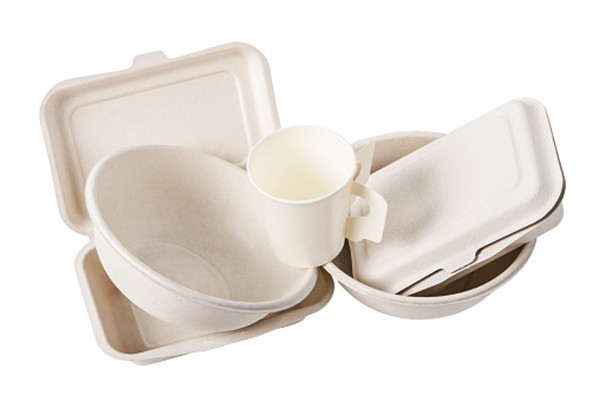
Have you ever heard of bagasse? Sometimes called sugarcane pulp, it is gaining popularity as a more sustainable alternative to plastic food service packaging.
 Definition of bagasse
You may have noticed that major supermarket brands and fast food chains are replacing some of their plastic food service packaging with another package that looks like cardboard. Food service packaging represents a huge opportunity to move from traditional plastic packaging to a circular economy model and to close the waste cycle by producing packaging from plants that can be composted and returned to earth as soil food, which can then be used to grow more plants. Compost also helps improve soil quality and retain water, making the land more drought-resistant. That's why we love bagasse.
Bagasse is the fibre left over after juice is extracted from the sugarcane plant - an abundant agricultural by-product that produces more than 54 million tonnes a year. Simply put, it's a plant fiber that breaks down naturally in the environment. Sugarcane pulp packaging is versatile, inexpensive and degrades rapidly when composted in home or industrial composting facilities.
Why do we love bagasse
Bagasse tableware is 100% biodegradable and compostable. Compost is nothing more than decaying animal and plant material that has been aerobically decomposed into very rich black soil. This rich soil is unbeatable and ideal for a variety of uses, including as a soil conditioner and fertilizer.
Bagasse has a low carbon footprint. Bagasse is made from sugar cane waste. As sugar cane grows, carbon from the atmosphere is captured by plants and converted into biomass. Bagasse can be recycled with cardboard. Hyde's
sugarcane packaging is suitable for recycling with cardboard.
Bagasse is renewable
Sugarcane is a rapidly renewable and widely available resource. In 2017, the world harvested about 1.8 billion tons of sugarcane. While 30 per cent of the crop is produced in sugar products, which accounts for 95 per cent of income, the remaining two thirds have little economic value after harvest and are mainly disposed of as waste.
Bagasse packaging can further maximize the value of crops and conform to the principle of circular economy.
Bagasse is compostable
Our
bagasse packaging is certified to be home compostable and industrial compostable. It will biodegrade in compost conditions in 30-90 days, leaving no toxic residue and producing nutrient-rich compost. This makes it the perfect packaging solution for catering services, as the packaging and any leftover food can go straight into the compost bin and be transferred from the landfill.
Hydepackage Natural Disposable Sugarcane Box Videos From YouTube
At Hyde Package, we are committed to zero waste, climate-friendly food service packaging. Our packaging solutions are made from rapidly renewable, sustainably sourced materials. These materials include not only bagasse but also cornstarch. Want to switch from traditional plastics? Check out our range of
bagasse takeaway containers.
Carlos Gomez
Paper products developer
Provide you with a one-stop solution for paper packaging solutions
Click to contact me

 Paper Package
 Paper Package
 Biodegradable Tableware


 3716
 25





 (Saudi Arabia) Submit Demand 45 Minutes Ago
 (Australia) Submit Demand 25 Minutes Ago
 (United Kingdom) Submit Demand 36 Minutes Ago
 (Sweden) Submit Demand 15 Minutes Ago